
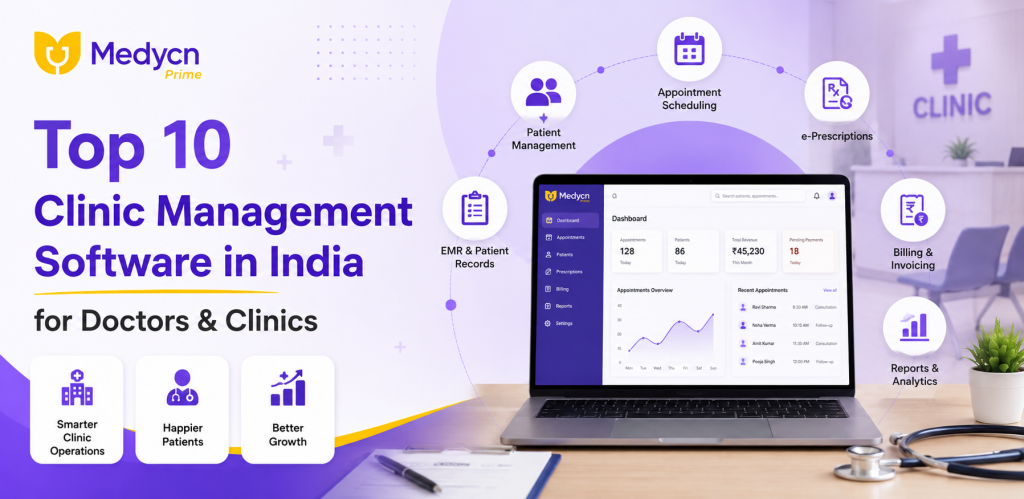
Running a clinic involves much more than seeing patients. Doctors and clinic staff have to manage appointments, patient records, prescriptions, billing, follow-ups, payments, and sometimes inventory all while trying to keep the patient experience smooth.
This is where clinic management software can make everyday work easier. Instead of handling different tasks through registers, spreadsheets, messaging apps, and separate systems, clinics can bring important workflows together on one digital platform.
But choosing the right software is not always easy. Every clinic has different requirements. A solo doctor may need a simple appointment and prescription system, while a multi-doctor clinic may need billing, reports, staff access, inventory, and more advanced management features.
In this guide, we look at 10 clinic management software options and the features doctors and clinics should consider before making a decision.
What Is Clinic Management Software?
Clinic management software is a digital system designed to help doctors and clinic teams manage everyday operations from one place.
Depending on the platform, it can include patient management, appointment scheduling, EMR, digital prescriptions, billing, payments, reminders, inventory, reports, and staff management.
The main idea is simple: instead of maintaining information across different tools, the clinic can manage connected activities through one system.
What Should You Look for in Clinic Management Software?
Before choosing a platform, look beyond the number of features listed on its website. The software should actually fit the way your clinic works.
Important features to consider include:
- Patient registration and digital records
- Appointment and schedule management
- EMR or EHR functionality
- Digital prescriptions
- Billing and payment management
- Patient reminders and communication
- Inventory management
- Reports and analytics
- Multi-user access
- Cloud or mobile access
- Data security and privacy
- Integrations required by your clinic
For Indian clinics, it can also be useful to check whether the platform supports workflows relevant to the local healthcare environment, such as digital health records, ABHA/ABDM-related capabilities, online communication, and Indian billing requirements.
Top 10 Clinic Management Software in India
The following platforms represent different approaches to clinic management. They are not ranked as a universal “best to worst” list because the right choice depends on the clinic’s needs.
1.Medycn Prime
Medycn Prime is a complete clinic management software that helps doctors and clinic teams manage their daily activities from one platform. It brings together patient records, appointments, digital prescriptions, billing, inventory, reminders, expenses, and reports, helping clinics keep their workflow more organized.
Key Features
- Patient management and digital health records
- Appointment scheduling and patient reminders
- Digital prescriptions
- Billing and payment management
- Inventory and expense management
- Reports and analytics
- Multi-user and role-based access
- Cloud-based access and mobile apps
Medycn Prime offers flexible plans designed to suit different clinic requirements, with both monthly and annual payment options. The annual plans start at ₹2,500/year + tax for Starter, ₹9,500/year + tax for Professional, and ₹20,000/year + tax for Enterprise. For clinics that prefer monthly payments, plans start at ₹250/month + tax for Starter, ₹950/month + tax for Professional, and ₹2,000/month + tax for Enterprise.
The plans differ based on factors such as patient capacity, storage, number of doctors and staff logins, reporting, inventory management, and multi-branch support. Starter is designed for small clinics and individual doctors, Professional is suited to growing multi-doctor clinics, while Enterprise is intended for larger or chain clinics.
With essential features such as patient management, appointment scheduling, digital prescriptions, reporting, billing, inventory, and expense management, Medycn Prime provides flexible clinic management software options for different practice sizes. Clinics can choose a monthly or annual plan based on their requirements and manage everyday operations through a centralized platform.
2. Practo Ray
Practo Ray is a clinic management solution associated with the wider Practo ecosystem. It is designed to help clinics manage areas such as appointments, patient information, prescriptions, and day-to-day practice activities.
It can be particularly relevant for doctors who are already familiar with the Practo ecosystem and want clinic-management functionality alongside its patient-facing platform.
Key areas include:
- Appointment management
- Patient records
- Digital prescriptions
- Billing
- Clinic workflow management
- Patient communication
3.Eka Care
Eka Care focuses on digital health records and connected healthcare services. Its platform is associated with India’s digital health ecosystem and provides tools for managing health records and patient information.
Clinics interested in digital health records and connected patient experiences may consider Eka Care as part of their software evaluation.
Key areas include:
- Digital health records
- Patient management
- Digital prescriptions
- Appointment-related features
- ABDM-oriented healthcare workflows
4. Clinicea
Clinicea is a cloud-based clinic management platform designed to help healthcare practices manage their clinical and administrative workflows.
It can be useful for clinics that want to bring appointments, patient records, billing, prescriptions, and other activities together instead of managing them separately.
Key areas include:
- Patient management
- Appointment scheduling
- EMR
- Billing
- Digital prescriptions
- Reports
- Clinic administration
5. KiviHealth
KiviHealth provides clinic management and EMR-related tools for healthcare practices. Its features are focused on helping doctors manage patient information and everyday clinic workflows digitally.
The platform can be considered by clinics looking for a combination of clinical records and practice-management functionality.
Key areas include:
- Patient records
- Appointments
- Digital prescriptions
- Billing
- Clinic management
- Reports
6. MocDoc
MocDoc offers healthcare management software covering clinics and other healthcare operations. Its broader product ecosystem includes areas such as appointments, patient records, billing, pharmacy, laboratory, and hospital-related workflows.
This makes it worth considering for practices that may need more than basic appointment and patient management.
Key areas include:
- Patient management
- Appointment scheduling
- EMR
- Billing
- Pharmacy
- Laboratory management
- Reports
7. DocPulse
DocPulse is a clinic management and EMR platform designed for doctors and outpatient practices. It brings together functions such as appointments, prescriptions, patient records, billing, and communication.
For smaller and growing clinics, having these routine tasks available through one platform can reduce the need for separate systems.
Key areas include:
- Appointment management
- Patient records
- Digital prescriptions
- Billing
- Patient communication
- Reports
8. DocEngage
DocEngage combines healthcare CRM and clinical management capabilities. Its focus extends beyond basic clinic administration into patient engagement and communication.
This type of platform may be useful for clinics that want to maintain communication with patients throughout their care journey.
Key areas include:
- Patient records
- Appointment management
- Patient engagement
- Communication
- Billing
- Healthcare CRM
9. MediXcel
MediXcel is a healthcare management platform covering areas of clinical and administrative management. Its broader healthcare software approach can make it relevant to clinics and healthcare facilities looking for a more comprehensive system.
Depending on the practice, doctors can evaluate whether its available modules match their specific workflow.
Key areas include:
- Patient management
- Clinical records
- Appointments
- Billing
- Pharmacy-related management
- Reports
10. HealthPlix
HealthPlix is an EMR and practice-management platform focused on doctors and clinical workflows. It is known for its prescription and digital patient-record capabilities and supports doctors across multiple specialties.
For doctors who spend a large part of their day documenting consultations and creating prescriptions, a simple clinical workflow can be an important consideration.
Key areas include:
- Digital patient records
- Prescription management
- Appointment management
- Clinical documentation
- Patient history
- Practice management
How to Choose the Right Clinic Management Software
There is no single software that will suit every doctor or clinic. A good starting point is to understand what your practice actually needs.
1. Consider Your Clinic Size
A solo doctor may only need patient records, appointments, prescriptions, and billing. A larger clinic may require multiple users, staff management, inventory, reports, and more advanced workflows.
2. Check the Appointment Workflow
Appointments are at the heart of most outpatient clinics. Look at how easily staff can create, reschedule, cancel, and track appointments.
3. Look at Patient Records
Check whether the software makes it easy to find previous consultations, medical history, prescriptions, and follow-up information.
4. Review Billing Features
The billing system should make it easy to create invoices, record payments, manage receipts, and review financial information.
5. Check Prescription Features
For doctors, prescription writing should be quick and straightforward. Check whether previous prescriptions and treatment information can be accessed during future consultations.
6. Think About Future Growth
Your requirements may change as your clinic grows. Consider whether the software can support additional doctors, staff, locations, or new modules later.
7. Ask About Data Security
Patient information is sensitive. Before choosing a platform, understand how patient data is stored, protected, backed up, and accessed.
Final Thoughts
Clinic management software is intended to free up your time by automating tedious chores, but selecting a platform solely on the basis of feature quantity may backfire. Starting from the inside out is a superior strategy. Examine your clinic’s actual daily operation, pinpoint your largest bottlenecks, and make a list of everything you absolutely must have. Consider user-friendliness, security, customer support, and scalability while weighing your options. Instead of forcing your practice to modify how it runs, take the effort to discover the proper match up front guarantees that your new software works for your staff.
Frequently Asked Questions
1. What is clinic management software?
Clinic management software is a digital platform that helps doctors manage appointments, patient records, prescriptions, billing, follow-ups, and other daily clinic activities.
2. Which software is best for a clinic?
The right software depends on your clinic size, specialty, budget, workflow, and required features. Comparing these factors can help you choose a suitable platform.
3. What features should clinic management software have?
Important features include patient management, appointment scheduling, EMR, digital prescriptions, billing, payments, reminders, inventory, reports, and secure access.
4. How much does clinic management software cost in India?
The cost varies based on features, users, clinic size, and pricing model. Basic plans may start at a few hundred rupees per month, while advanced systems can cost significantly more.
5. Is clinic management software useful for small clinics?
Yes. Small clinics can use it to manage appointments, patient records, prescriptions, billing, and other administrative tasks in one organized system.
6. How do I choose clinic management software for my clinic?
Start by identifying your essential requirements, such as appointments, patient records, billing, prescriptions, inventory, and reports. Then compare software based on features, ease of use, support, security, and cost.