
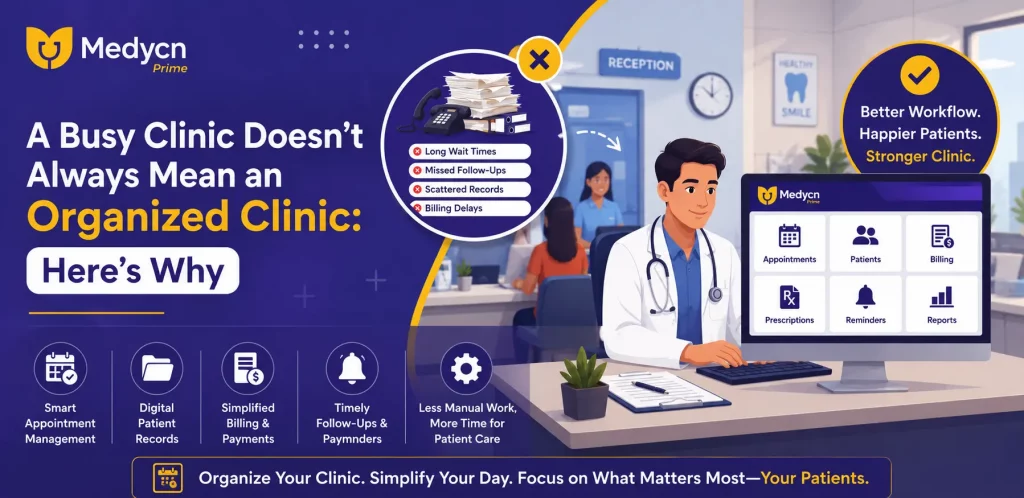
A busy clinic often means more patients, more appointments, and more responsibilities for doctors and staff. But a full waiting room does not necessarily mean the clinic is running efficiently.
When appointments are managed manually, patient records take time to locate, billing is handled separately, or follow-ups depend on someone remembering them, daily operations can quickly become difficult to manage.
The real challenge is not always the number of patients. In many cases, it is how the clinic’s everyday work is organized.
When a Busy Clinic Starts Becoming Difficult to Manage
A clinic can have several activities happening at once. Patients may be waiting, appointments may be changing, doctors may be consulting, and staff may be handling billing or searching for patient information.
When these activities are managed through notebooks, spreadsheets, phone calls, messages, or separate systems, even simple tasks can take longer than expected.
Some common signs include:
- Longer patient waiting times
- Confusion around appointment schedules
- Difficulty locating patient records
- Delays in billing and payment tracking
- Missed follow-ups or reminders
- Too much time spent on repetitive administrative tasks
Each issue may appear manageable on its own, but together they can make a busy clinic harder to operate.
1. Appointment Management Can Become Complicated
Appointments are often one of the first areas affected as a clinic gets busier.
Managing bookings through phone calls, notebooks, or multiple messaging channels can make it difficult to maintain a clear view of the day’s schedule. Changes, cancellations, double bookings, and missed appointments can also disrupt the clinic’s workflow.
A clinic appointment scheduling system can help keep bookings in one place, making it easier for staff to view appointments, make changes, and manage the daily schedule.
2. Patient Records Need to Be Easily Accessible
Patient information is required throughout the day. Searching through physical files or different sources every time a record is needed can slow down both clinical and administrative work.
A digital patient management system can keep important information organized in one place. Patient history, consultation notes, prescriptions, and other details can be accessed when required instead of being spread across different records.
This can make it easier for doctors and staff to manage routine consultations and related tasks.
3. Billing Can Become Another Source of Work
Billing may seem like a simple task, but it can become more time-consuming as patient numbers increase.
When consultation charges, payments, pending amounts, and receipts are maintained separately, staff may have to spend additional time checking and updating records.
Clinic billing software can help organize billing and payment information, making it easier to keep track of transactions along with other clinic activities.
4. Follow-Ups Can Be Easy to Miss
A patient’s care does not always end with a single consultation.
Some patients may need another appointment, a follow-up consultation, or a reminder after a specific period. If these details are maintained only on paper or depend on staff remembering them, important follow-ups can be overlooked.
Organized follow-up records and automated reminders can help clinics keep track of these activities without creating additional administrative work.
5. Staff Should Not Have to Do the Same Work Repeatedly
Repetitive administrative tasks can take up a significant amount of time in a busy clinic.
Entering the same information multiple times, checking different records, updating appointment details, and preparing bills manually can add unnecessary work to the staff’s routine.
A clinic management system can bring several of these activities into one workflow, reducing the need to move between different tools and processes.
How Can a Clinic Become More Organized?
A clinic does not necessarily need a complete operational overhaul to become more organized. Small improvements to everyday processes can make a noticeable difference.
Clinics can start by:
- Keeping patient information digitally organized
- Managing appointments from a central system
- Maintaining accurate billing and payment records
- Setting reminders for follow-ups
- Reducing unnecessary paperwork
- Making important information easily accessible to staff
- Reviewing daily operations to identify recurring issues
The objective is not simply to manage more patients. It is to create a workflow that remains manageable as the clinic grows.
How Clinic Management Software Can Help
Clinic management software can bring different parts of a clinic’s daily operations together. Instead of managing appointments, patient records, prescriptions, billing, inventory, and follow-ups through separate processes, clinics can manage them through a centralized system.
Medycn Prime, for example, includes tools for patient management, appointment scheduling, digital prescriptions, billing, inventory, reminders, and clinic reports.
For growing clinics, having these activities connected can simplify everyday coordination and reduce the amount of manual work required from doctors and staff.
A Busy Clinic Needs a Better Workflow, Not Just More Staff
A growing patient base can be a positive sign for any clinic, but growth can also reveal weaknesses in existing workflows.
If staff are constantly looking for records, adjusting appointments, checking payments, or trying to remember follow-ups, the problem may not simply be the amount of work. The way those tasks are organized may need improvement.
With clear processes and a suitable clinic management system, clinics can make daily operations easier to handle while allowing doctors and staff to spend more time on patient care.
Frequently Asked Questions
1. What is a clinic management system?
A clinic management system is software that helps clinics manage everyday activities such as appointments, patient records, billing, prescriptions, follow-ups, and administrative tasks.
2. How can clinic management software help a busy clinic?
It can bring important clinic activities into one system, helping staff manage appointments, patient information, billing, reminders, and other routine tasks more efficiently.
3. Is clinic management software useful for small clinics?
Yes. Small clinics can use clinic management software to organize appointments and patient information, reduce paperwork, and simplify routine administrative work.
4. What should a clinic management system include?
Common features include patient management, appointment scheduling, digital patient records, prescriptions, billing, reminders, reporting, and inventory management.