
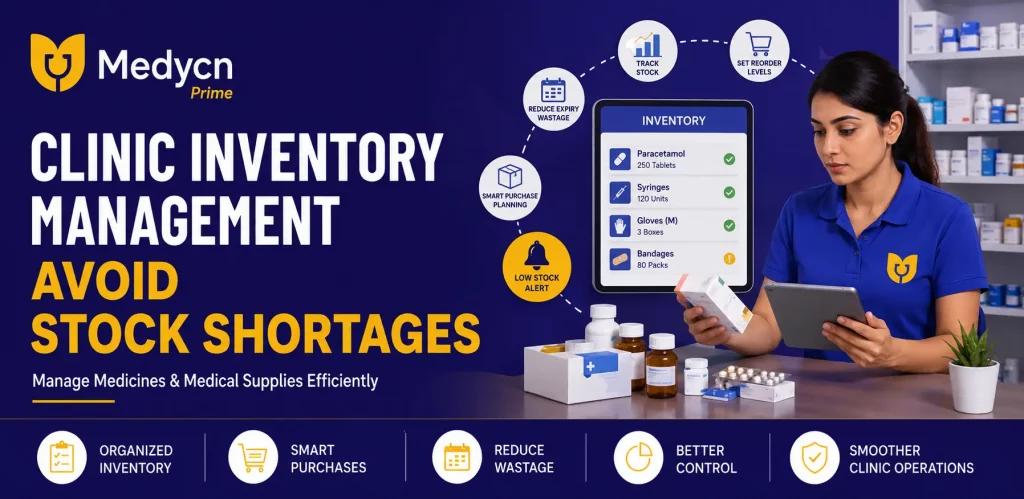
Running a clinic involves more than managing consultations and patient records. Doctors and clinic staff also need to ensure that essential medicines, medical supplies and consumables are available whenever they are required.
Consider a situation where a doctor needs a particular medical consumable during a procedure, but the clinic discovers that the stock has already run out. In another situation, a clinic may purchase supplies in large quantities without realizing that some products are already available in storage.
These problems can happen when stock information is not updated regularly or purchases are managed without proper tracking.
For clinics that maintain medicines, diagnostic supplies and medical consumables, inventory management plays an important role in daily operations. A clear stock management process helps clinics monitor available quantities, plan purchases and reduce unnecessary wastage.
In this guide, we explain how clinics can manage medicine and medical consumable inventory, avoid stock shortages and use clinic inventory management software to organize stock-related activities.
Why Is Inventory Management Important for Clinics
A clinic may maintain different types of inventory depending on its specialty and services. This can include medicines, injections, gloves, syringes, dressings, diagnostic supplies and other medical consumables.
When these items are managed manually, it becomes difficult to maintain an accurate picture of available stock.
Some common challenges include:
- Unexpected stock shortages: Essential medicines or consumables may run out when they are needed for patient care.
- Excess purchasing: Clinics may purchase additional stock without checking the quantities already available.
- Expiry-related wastage: Products may remain unused until they reach their expiry dates.
- Manual stock tracking: Staff may spend time checking registers and physically counting products.
- Unplanned purchases: Without knowing current stock levels, clinics may place orders at the last minute.
- Limited stock visibility: Doctors and administrators may not have an updated understanding of the supplies available in the clinic.
An organized inventory management process helps clinics maintain better control over these activities.
7 Practical Ways to Improve Inventory Management in a Clinic
1. Maintain a Complete Inventory List
Start by creating a list of all medicines, medical consumables and other supplies maintained by your clinic.
Instead of recording purchases only when new stock arrives, maintain an updated inventory list that reflects the items currently available.
Your inventory list can include:
- Product or medicine name.
- Product category.
- Available quantity.
- Unit of measurement.
- Purchase date.
- Supplier information.
- Expiry date, where applicable.
Categorizing items makes it easier for staff to identify products and understand what needs to be replenished.
2. Monitor Stock Levels Regularly
Waiting until a product runs out before placing a purchase order can disrupt clinic activities.
Clinics should regularly check the available quantity of frequently used medicines and consumables.
For example, gloves, syringes, cotton, disinfectants and commonly used supplies may need more frequent monitoring than products used occasionally.
A simple stock review process can help staff identify items that are running low and arrange purchases before they become unavailable.
3. Set Reorder Levels for Essential Supplies
Not every product needs to be purchased at the same time or in the same quantity.
Clinics can establish minimum stock levels for frequently used items based on their consumption patterns and supplier delivery timelines.
For example, if a clinic regularly uses a particular medical consumable, it can decide on a minimum quantity that should always be maintained.
When the available quantity approaches this level, the purchasing team can plan a replenishment order.
This helps clinics avoid last-minute purchases and maintain the supplies needed for daily activities.
4. Check Expiry Dates and Reduce Wastage
Managing stock quantities alone is not enough. Clinics also need to pay attention to product expiry dates.
Medicines and certain medical supplies may become unusable after their expiry dates. If these products are not monitored properly, clinics may face avoidable wastage.
A few useful practices include:
- Check expiry dates when receiving new stock.
- Arrange products so that earlier-expiring items are used first, where appropriate.
- Conduct regular expiry checks.
- Separate expired or unusable products from available stock.
- Maintain records of products that need replacement.
The First Expiry, First Out (FEFO) approach can help clinics prioritize products with earlier expiry dates.
5. Maintain Proper Purchase and Supplier Records
Inventory management also involves understanding where products are purchased and how frequently supplies need to be replenished.
Clinics should maintain purchase records to track the items received, quantities purchased and associated costs.
Useful information includes:
- Supplier details.
- Purchase date.
- Product names and quantities.
- Purchase prices.
- Invoice details.
- Received quantities.
Maintaining these records makes it easier to review purchasing patterns and plan future requirements.
6. Conduct Regular Physical Stock Audits
Even when inventory records are maintained regularly, the recorded quantity may not always match the actual stock available.
Products may be used, damaged, misplaced or entered incorrectly during stock updates.
Conducting periodic physical stock checks helps clinics compare the recorded quantity with the items available in storage.
During a stock audit, staff should:
- Count the available items.
- Compare the physical quantity with inventory records.
- Identify missing or excess quantities.
- Check damaged and expired products.
- Update stock information where necessary.
Regular stock verification helps maintain more reliable inventory records.
7. Use Clinic Inventory Management Software
When a clinic manages several medicines and consumables, maintaining everything through paper registers or spreadsheets can become time-consuming.
Clinic inventory management software provides a more organized way to maintain stock-related information.
Before choosing a system, clinics should evaluate whether it supports their requirements, such as:
- Product and inventory management.
- Stock quantity tracking.
- Purchase record management.
- Stock updates.
- Inventory reports.
- Integration with other clinic activities.
A centralized system can reduce repetitive manual documentation and make inventory information easier to review.
What Happens When Clinics Do Not Manage Inventory Properly?
Poor inventory management can affect more than the availability of medical supplies.
1. Interruptions in daily clinic activities
When essential supplies are unavailable, staff may need to arrange urgent purchases or make alternative arrangements.
2. Increased purchasing costs
Last-minute purchases can make it difficult to plan procurement efficiently.
3. Unnecessary stock wastage
Excess purchasing and inadequate expiry monitoring can result in products remaining unused.
4. Difficulty tracking expenses
Without organized purchase records, clinic administrators may find it difficult to understand how much is being spent on medicines and consumables.
5. Additional administrative work
Staff may spend extra time checking registers, counting products and updating stock information manually.
A consistent inventory process helps clinics reduce these avoidable operational difficulties.
How Medycn Prime Helps Clinics Manage Inventory
Managing clinic inventory becomes more convenient when stock-related activities are organized through a centralized clinic management platform.
Medycn Prime is clinic management software designed to help doctors and clinic teams manage important administrative activities through one platform.
Its inventory management capabilities support clinics in organizing stock information alongside other clinic operations.
With Medycn Prime, clinics can manage important activities such as:
- Inventory Management
Maintain organized inventory information and manage the supplies used in everyday clinic operations. - Billing and Payment Management
Manage invoices and payment records through the same platform, helping clinics keep administrative activities connected. - Patient Management
Maintain patient profiles and access relevant patient information when required. - Electronic Medical Records
Organize consultation details, medical histories and prescriptions through digital records. - Reports and Analytics
Review available operational and financial information to understand different aspects of clinic activities.
By bringing inventory management together with other essential clinic functions, Medycn Prime helps doctors and clinic administrators reduce dependence on disconnected manual processes.
Clinics can explore Medycn Prime to understand how its inventory and clinic management features fit their daily requirements.
Final Thoughts
Managing medicines and medical consumables is an important part of running an organized clinic. Without proper stock monitoring, clinics may experience unexpected shortages, unnecessary purchases and expiry-related wastage.
Maintaining an updated inventory list, checking stock regularly, planning purchases and conducting physical stock audits can help clinics improve their inventory management process.
For clinics looking to move beyond manual stock registers, a clinic management system like Medycn Prime provides a way to organize inventory alongside other important clinic operations.
Frequently Asked Questions
1. What is inventory management in a clinic?
Inventory management in a clinic is the process of maintaining, tracking and organizing medicines, medical consumables and other supplies required for daily operations.
2. How can clinics prevent medicine stock shortages?
Clinics can maintain updated inventory records, monitor frequently used products, establish minimum stock levels and plan purchases before essential items run out.
3. What is clinic inventory management software?
Clinic inventory management software is a digital system that helps clinics organize product information, monitor stock quantities and manage inventory-related activities.
4. How can clinics reduce medicine expiry wastage?
Clinics can conduct regular expiry checks, organize products by expiry date and follow the First Expiry, First Out (FEFO) approach where applicable.
5. Why should clinics conduct regular stock audits?
Stock audits help clinics compare physical stock with recorded quantities, identify discrepancies and maintain more accurate inventory information.